
Thrift and cooperative schemes
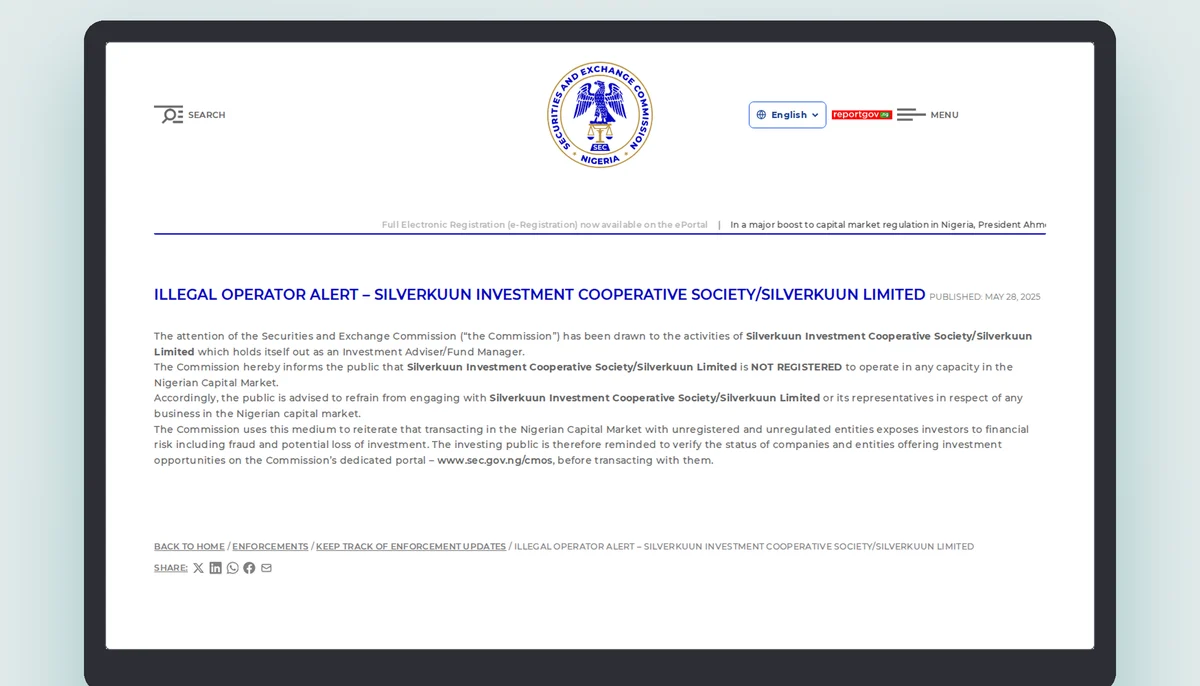
A genuine cooperative society or thrift group is made up of members who know each other, have written rules, and account for their money. A platform that uses the words 'cooperative' or 'thrift' to collect deposits from strangers online is a different thing. This page explains the difference and the bodies that supervise cooperatives.
What a genuine cooperative looks like
A genuine cooperative society is a group of people who come together for a common economic purpose. Members know each other, or at least have a common bond. The rules are written in a constitution, and the money is accounted for by elected officers. The group is usually registered with the state cooperative authority.
A thrift group is similar but smaller. Members contribute regularly, and the money is lent to members or saved. The group has clear rules about contributions, loans and withdrawals. The members can hold the officers accountable.
What an online platform looks like
An online platform that uses the words 'cooperative' or 'thrift' may not be any of these. It may collect deposits from strangers online, promising high returns. The platform may not have a physical meeting, and the members may not know each other. The rules may be vague, and the money may be controlled by the platform operators.
Such a platform is not a cooperative in the legal sense. It is an investment scheme that uses the language of cooperatives to gain trust. The SEC may consider it an investment scheme and may name it on its list of known investment schemes.
The bodies that supervise cooperatives
In Nigeria, cooperative societies are supervised by state ministries of cooperatives, not by the SEC. Each state has a registrar of cooperative societies. A genuine cooperative should be registered with the state where it operates.
The SEC does not supervise cooperatives. But if a cooperative takes deposits from the public and promises returns, the SEC may consider it an investment scheme. The SEC's list of known investment schemes may include entities that call themselves cooperatives.
How to tell them apart
Ask the platform: Are you registered with a state registrar of cooperatives? Can I see your registration certificate? Where are your members? How do you account for the money? A genuine cooperative can answer these questions. An online platform may not.
Also ask: What happens to my money if the platform stops? A genuine cooperative has a liquidation process. An online platform may just disappear. The reader should not rely on the word 'cooperative' alone.
What the SEC says about thrift schemes
The Securities and Exchange Commission of Nigeria warns against schemes that take deposits from the public and promise returns. The Commission says that such schemes must be registered with it. A thrift scheme that is not registered is not authorised to take investments.
The SEC's list of known investment schemes may include thrift schemes. The reader should check the list. The SEC's notices are warnings, not court findings.
No body certifies a scheme as safe
Registration with a cooperative authority does not mean the scheme is safe or that it will not fail. It means the scheme has met the requirements for registration. The reader should still read the rules and understand the risks.
This site does not say that any scheme is lawful or unlawful. It reports what the SEC publishes. The reader should ask the relevant body for each question: the state cooperative authority for cooperative registration, the SEC for investment activities.
A thrift group's power to hold deposits comes from its members
A genuine thrift or cooperative is built around a closed circle of people who know one another or share a workplace, a market, a trade or a community. The group's rules are set by its members, and the officers are chosen from among them. Any money collected is held for the members' own purposes, such as rotating savings, loans to members, or bulk purchases. The group does not seek deposits from strangers and does not advertise for the public to join.
When the group is open to anyone with a phone and a bank account, the relationship changes. The people running it are no longer accountable to a circle of peers but to a crowd they may never meet. The rules can be changed without a general meeting, and the members have no practical way to remove an officer or demand an account. That is a different kind of structure, even if it uses the words cooperative or thrift.
The power to hold deposits in a genuine thrift group flows from the members' agreement and their ability to enforce it. In an online platform, the power flows from the platform's own terms and conditions, which the user accepts by clicking. The user has no seat at the table where the rules are made. The question to ask is not what the platform calls itself, but who can call a meeting, vote on the rules, and inspect the books.
A platform that pays interest to the public is taking deposits
When an online platform invites the public to put money in and promises a return, it is performing a function that looks like deposit-taking. In Nigeria, deposit-taking from the public is a regulated activity, and only institutions licensed for that purpose may do it. A cooperative or thrift group that collects money from its own members for their own benefit is not taking deposits from the public, because the members are the owners of the funds.
The language of interest, profit-sharing, or returns changes the character of the arrangement. A genuine thrift group may give loans to members and charge a small amount for the service, but it does not promise a fixed return on money placed with it. If a platform advertises a percentage return on whatever you put in, it is describing an investment product, not a thrift contribution. The return is being paid from somewhere, and the user should ask where.
The distinction matters because the regulatory bodies are different. A cooperative society is supervised by the state ministry responsible for cooperatives, and it is not allowed to collect deposits from the public. A platform that collects deposits from the public and promises a return falls under the securities or banking regulators, even if it has registered a cooperative name. The name does not change the function, and the function is what the regulator looks at.
A cooperative's registration is not a licence to raise money online
A cooperative society can be registered under the cooperative law of a state or the federal capital territory. That registration gives the society a legal identity and allows it to operate as a cooperative for its members. It does not give the society permission to collect money from the general public, and it does not give the society permission to promise returns to outsiders. The registration is a recognition of the cooperative's internal structure, not a licence to take deposits.
When a cooperative wants to raise money from non-members, it steps outside the cooperative framework. The law expects it to seek the appropriate licence for deposit-taking or investment business, depending on what it is actually doing. A cooperative that opens its doors to the public and takes money from anyone who signs up online is no longer acting as a cooperative. It is acting as a financial business, and it needs the licence that goes with that business.
The bodies that supervise cooperatives do not supervise online platforms that use the word cooperative in their name. The state cooperative department looks at the society's constitution, its membership register, and its annual returns. It does not check whether the platform's promised returns are sustainable or whether the money is safe. A user who puts money into an online cooperative platform cannot rely on the cooperative registration as a sign that the platform is supervised for that activity.
A thrift platform may be registered at the CAC and still be on the SEC's list
The Corporate Affairs Commission registers companies and business names. A platform that calls itself a thrift or cooperative may have a CAC registration, and that registration is real. But CAC registration only means the entity exists as a legal person. It does not mean the entity is licensed to take deposits or to sell investments. Many platforms on the SEC's list have a CAC registration number.
The SEC's list is about securities and investment business. A platform that collects money from the public and promises a return is carrying on investment business, whether or not it has a CAC registration. The SEC will warn about an entity that is not registered with the SEC, even if the entity is registered with the CAC. The two registers are separate, and they are kept by different bodies for different purposes.
A user who checks only the CAC register will get a false sense of safety. The CAC register tells you the entity exists and who its directors are, but it does not tell you whether the entity is allowed to take your money. The SEC register tells you whether the entity is licensed to carry on investment business. The two checks are not substitutes for each other, and neither check tells you the platform will not lose your money.
The state cooperative department does not check an online platform's books
Each state has a department or ministry that registers and supervises cooperative societies. The department checks that the society's constitution is in order, that it holds meetings, and that it files returns. But the department's staff are not auditors, and they do not check whether the society's investments are sound or whether the society can pay its debts. The supervision is about form, not about the safety of members' funds.
An online platform that uses the word cooperative in its name may not be registered with any state cooperative department. It may simply have chosen the name because it sounds trustworthy. If it is registered, the registration is for a society with a membership, not for an online platform open to the public. The department has no power to supervise a platform that takes money from strangers, because that platform is not a cooperative under the law.
The reader should not assume that a platform with a cooperative name is supervised by the cooperative department. The only way to know is to ask the platform for its cooperative registration number and the state where it is registered, then confirm with that state's department. Even then, the confirmation only tells you the society exists. It does not tell you the platform is safe, and it does not tell you the platform is allowed to take your money.
What a thrift platform can do with your money without being a bank
An online platform may call itself a cooperative and ask members to send money to a personal account or a business name. This is not how a registered cooperative collects contributions. A cooperative keeps member funds in its own name, not in the promoter's name. When you send money to a personal account, you are not making a contribution to a cooperative; you are transferring money to an individual. No cooperative officer should ask you to pay into a private wallet or a personal bank account.
A genuine thrift group pools contributions and then lends to members, often for a small interest. The money stays within the group's account, and the group's executives are signatories. An online platform that is not registered as a cooperative may instead use your money to pay earlier members. This is the same mechanism as a Ponzi, even if the platform calls itself a thrift or a cooperative. The platform does not need a banking licence if it only moves money between members, but it does need a cooperative registration if it uses that word.
Ask where the money sits. If the answer is a personal account or an e-wallet, walk away. A registered cooperative must have a bank account in the cooperative's name, and the account signatories are elected officers. You can ask to see the account name before you send a kobo. If the platform refuses to show the account name, it is not operating as a cooperative. This one question separates a thrift group from a collection plate.
Two kinds of groups
Read next
Asked at the point of paying in
What is the difference between a cooperative and a thrift platform?
A genuine cooperative has members who know each other, written rules, and accountability. An online thrift platform collects deposits from strangers and may not have any of these.
Who supervises cooperatives in Nigeria?
State ministries of cooperatives, through their registrars. Each state has a registrar of cooperative societies. The SEC does not supervise cooperatives.
Can a cooperative take investments from the public?
If a cooperative takes deposits from the public and promises returns, it may be considered an investment scheme by the SEC. Such a scheme must be registered with the SEC.
How do I check if a cooperative is registered?
Ask the cooperative for its registration certificate from the state registrar. You can also contact the state ministry of cooperatives.
What should I do if a thrift platform stops paying?
Report to the SEC if it is an investment scheme, to the police if you suspect fraud, and to your bank about the transfer. No body can promise a refund.
Open a CFD account with an international broker
If you are looking for a broker to trade contracts for difference, this site links to FxPro. Read the risk warnings and the client agreement before opening an account.